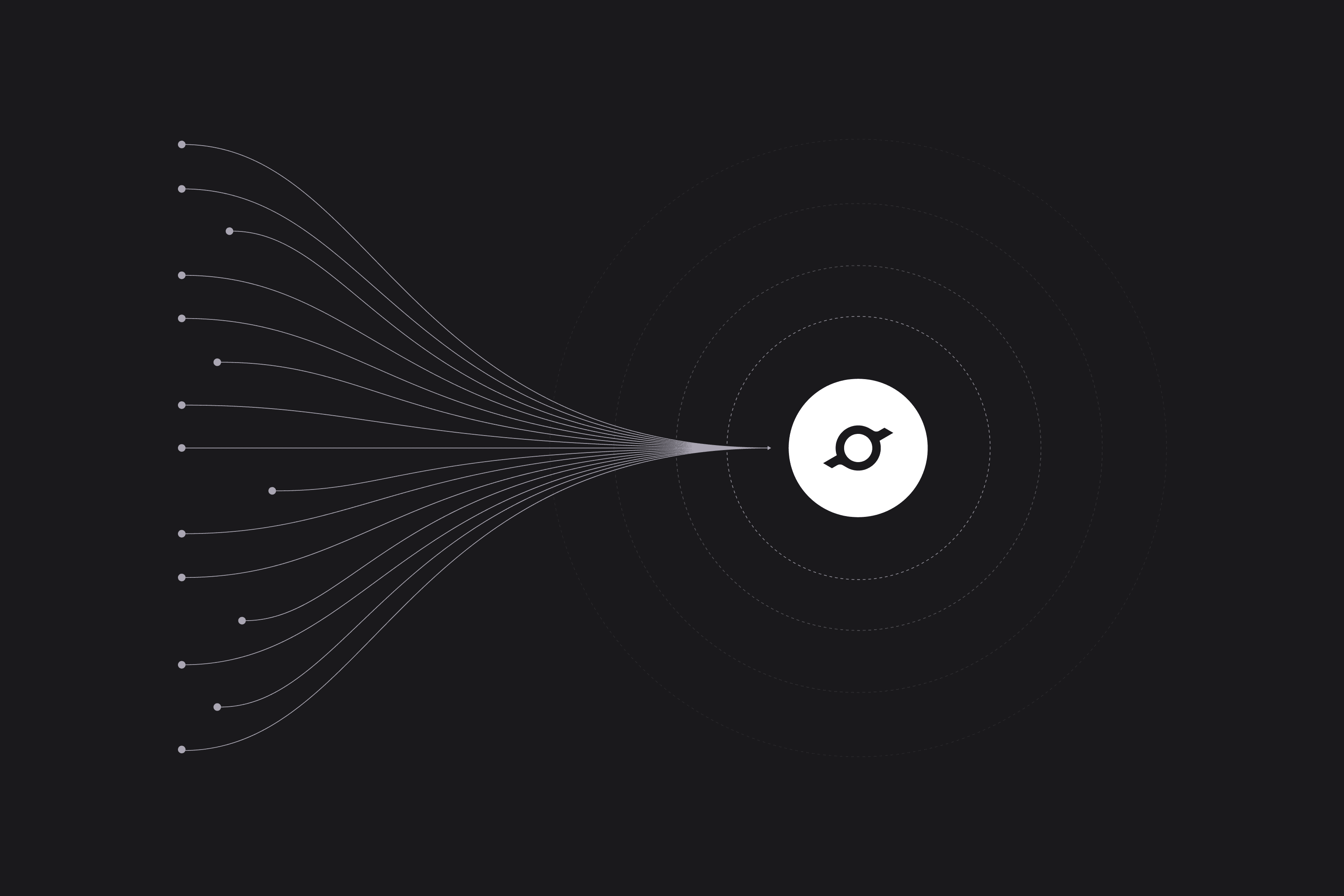
Summary: Modern strategy work suffers above all from fragmentation. In many companies, strategic clarity, problems & potential, strategic planning, execution & tracking, and optimization & steering happen in different systems and teams. As a result, decision-makers and growth teams spend a lot of time gathering information and coordinating alignment. Too little room is left for decisions and steering. This article describes the six biggest problems of today's strategy work, breaks strategic work down into five areas and shows how they come together in one continuous system. It is the starting point of the series "The Anatomy of Strategic Work," which explores each of the five areas in depth.
Strategy is supposed to provide direction, enable decisions and steer growth. In many companies, the opposite happens: strategic work becomes more complex, slower and more effortful.
Teams work with dashboards, roadmaps, presentations, Miro boards, project management tools and reports. There is no shortage of data. And yet the answer to three central questions is often missing:
What is happening right now? Why is it happening? And what should we do next?
The cause usually lies in how strategic work is organized and executed.
Strategy is spread across different teams, tools, documents and processes. Strategic clarity has to be rebuilt manually again and again. Planning happens in a different place than execution. Performance is analyzed in hindsight and only feeds into steering with a delay.
For modern growth teams, this is increasingly becoming a problem.
In this video, cosmos™ founder Florian Felter explains what is slowing down growth teams and decision-makers today and how strategic work can move faster.
- Video (in German): How strategy needs to be led today
What is strategic work?
Strategic work is far more than writing a strategy paper.
For growth teams and decision-makers, strategy is a continuous process. It includes understanding the current situation, recognizing problems and potential, planning, execution and ongoing optimization.
Strategic work can be divided into five areas. Each one answers a central question. In our series "The Anatomy of Strategic Work," we explore each area in its own article and video:
- Strategic clarity: What is happening right now? Where do we stand, which goals are we pursuing, and which initiatives contribute to them? →
- Problems & potential: Where do we need to act? Where are the risks, blind spots, opportunities and growth levers? →
- Strategic planning: What do we want to change? Which initiatives are we planning, for whom and with what expected impact? →
- Execution & tracking: Is what we're doing working? Does execution measurably contribute to our goals? →
- Optimization & steering: What do we need to change now? What works, what doesn't, and where do we adjust course? →
In a well-functioning system, these areas interlock.
In reality, however, they are often separated from one another.
And that is exactly where the biggest problems of today's strategy work come from.
Why strategy fails: the 6 biggest problems of strategy work today
1. Strategic clarity is scattered across tools and teams
The first problem often starts with a seemingly simple question:
How is our business actually doing right now?
The answer rarely lives in one place.
KPIs sit in dashboards. The strategy is in a slide deck. The roadmap lives in another tool. Customer journeys are maintained in Miro. Market data sits in research documents. Initiatives are tracked in project management tools.
And important information also lives in meetings, emails and the heads of individual employees.
The result: there is no shared picture of the situation. Decision-makers and teams have to piece the current situation together from scratch every single time. That costs time and creates uncertainty at the same time.
When a Head of Growth has to ask in the morning:
"How is our most important initiative actually going?"
that is often already a warning sign. Because the answer should be available immediately.
Strategic clarity has to be continuously available
Modern strategy work therefore needs more than data.
It needs context.
A KPI alone doesn't tell you why a trend is changing. An initiative alone doesn't tell you what contribution it is supposed to make to the business goal. A goal alone doesn't tell you which activities are currently contributing to it.
Strategic clarity only emerges once this information is connected.
2. Strategy work creates too many silos
The second problem is fragmentation between teams and functions.
Marketing has its goals. Sales has its goals. Product has its roadmap. Customer Success has its KPIs. Strategy has its plan.
Each team can be excellently organized on its own, and still there is no shared model of the company.
This leads to a classic alignment problem:
Everyone is working on their own topics, but not necessarily on the same system.
This becomes especially critical when it comes to growth. Because growth doesn't happen inside a single department. Marketing influences Sales. Sales influences revenue. Product influences conversion and retention. Customer Success influences expansion and churn.
A single strategic initiative can therefore affect numerous other areas.
When these connections aren't visible, strategic steering becomes unnecessarily complicated.
→ Go deeper: What alignment really costs
3. Planning and execution are disconnected
Another problem is the separation between strategic planning and operational execution.
A company develops a growth strategy, for example, and defines:
- target groups
- positioning
- growth drivers
- strategic goals
- initiatives
- expected impact
After that, the strategy often ends up in a presentation or a strategy document. The actual execution then happens in other systems, where tasks are assigned, projects are tracked and results are documented. Along the way, the link between strategic planning and execution is easily lost.
The central question then becomes:
How much does our current execution actually contribute to our strategic goals?
Without a shared model, that question is hard to answer.
4. Performance is managed in hindsight instead of continuously
A similar problem arises with tracking.
Many companies analyze their performance through regular reports and meetings.
At the end of a week, a month or a quarter, they look at:
- What happened?
- Which KPIs changed?
- Which activities worked?
- Where are the deviations?
The problem:
The analysis often comes only after the change has already happened.
This makes strategic steering retrospective.
Modern growth teams, on the other hand, need a continuous steering loop:
Goal → Initiative → Execution → Impact → Insight → Adjustment
The faster this loop runs, the faster a company can respond to change.
5. Generative AI alone doesn't solve the context problem
Generative AI has added a new way to analyze large amounts of information quickly.
A company can, for example, load strategy documents, reports or presentations into an AI system and have it generate summaries or recommendations.
That is helpful. A fundamental problem remains, though.
Information is not yet strategic context.
An AI can analyze a document. The real challenge, however, is understanding how different pieces of information relate to one another:
- Which initiative contributes to which goal?
- Which KPI change is linked to which activity?
- Who is responsible for the initiative?
- Which assumptions is the plan based on?
- Which other goals are affected?
- Where are the contradictions?
- Which information is missing?
- Which target group was the initiative intended for?
- What effect would a given change have on the overall system?
That is exactly why AI in strategy work needs more than documents.
It needs a model of how growth actually happens.
→ Go deeper: Why ChatGPT and other AI tools don't understand your strategy
6. Strategic work itself becomes a time sink
Perhaps the biggest problem is that decision-makers and teams spend a considerable share of their time just making strategic work possible in the first place.
Searching for information. Assembling dashboards. Creating reports. Preparing meetings. Consolidating information from different teams. Aligning initiatives. Updating statuses. Building presentations. Following up on results.
These activities are necessary when information is fragmented. On their own, they don't create any growth yet.
The strategic work that creates value only starts after that:
Making decisions. Setting priorities. Planning initiatives. Steering execution. Solving problems. Seizing opportunities. Adjusting course.
The decisive question is therefore:
How much of a growth team's time should actually go into strategic decisions, and how much into preparing those decisions?
→ Go deeper: What alignment really costs
Strategy needs a connected system
Yet another dashboard, yet another project management tool or yet another AI tool tends to make fragmentation worse.
Growth teams need a shared model that connects the five areas of strategic work: strategic clarity, problems & potential, strategic planning, execution & tracking, and optimization & steering.
Technology doesn't replace human decisions in this.
It reduces the information and coordination work required, so that people have more time for the actual strategic work.
How cosmos™ rethinks strategic work
This is exactly where cosmos™ comes in.
cosmos™ is an AI-powered growth strategy platform for the strategic work of growth teams and decision-makers. The platform covers all five areas of strategic work and brings them together in one shared system.
Each area can also be used on its own. Teams can start where the need for action is greatest and expand the system step by step.
1. Strategic clarity: a real-time picture of your growth instead of manual information hunting
cosmos™ connects relevant information and makes visible what is happening in your growth right now.
As a result, decision-makers and teams spend less time assembling the current status from different sources. Everyone works from the same foundation.
The goal is a shared understanding:
Where do we stand? What is happening right now? What needs attention?
2. Problems & potential: spot them before they get expensive
In complex growth systems, many problems are hard to spot as long as nobody is specifically looking for them. For the same reason, potential often goes unused.
cosmos™ uses AI to make problems and potential visible across your entire growth system. The AI works with the full context of goals, initiatives, responsibilities, data and cause-and-effect relationships.
This makes it visible, for example, when an initiative has been falling short of its expected impact for weeks, or when planned points of contact for an important target group are missing from execution.
3. Strategic planning: plan in context and play through scenarios
In cosmos™, every new initiative is embedded in the existing strategic big picture and in an impact chain.
This makes key questions visible:
- What is the goal?
- Which other goals are affected?
- How does the initiative contribute to the business goal?
- Who is responsible?
- Which information is still unknown?
- Which assumptions need to be validated?
- Which target group is the initiative aimed at?
This structure alone creates more strategic clarity. It makes visible what a team already knows, and just as much what is still unknown. On request, the AI also suggests how an initiative could be set up based on proven practices.
Play through scenarios before deciding
Good planning also answers the question:
What happens if we change something?
cosmos™ lets you look at scenarios and simulate changes in your growth system:
- Which initiative should be changed?
- Where should we invest more?
- Which dependencies arise?
- Which change could help us reach the business goal more effectively?
This lets you think decisions through in advance, before budget and time are committed.
4. Execution & tracking: against the same model you planned in
A key difference lies in the connection between planning and execution.
The execution of an initiative runs against the same model it was planned in. The data comes from the systems the company already uses.
This makes it continuously visible:
- What was planned?
- What was implemented?
- What impact was expected?
- What is actually happening?
- Where are the deviations?
Tracking thus becomes an integral part of strategic steering.
5. Optimization & steering: spot it earlier, adjust course faster
Steering requires current information and the full context. Both are always available in cosmos™.
When initiatives deviate from their goal or assumptions change, it becomes visible early. Next steps can be derived directly from the insight and tracked in the same system.
This significantly shortens the time between insight and adjustment.
How the five areas become one continuous system
The five areas of strategic work influence one another. Clarity makes problems and potential recognizable. Problems and potential determine what gets planned. Planning defines what execution and tracking are measured against. Tracking shows where to adjust course. And every adjustment in turn changes the overall picture.
This doesn't result in a fixed sequence. In practice, every team starts at a different point. Some start with strategic clarity because nobody knows exactly where the company stands. Others start with tracking because they can't see whether their initiatives are working. Each area delivers value on its own.
The full effect emerges when the areas live in the same system. Information from one area is then immediately available in all the others: an insight from tracking flows straight into planning, and a new goal immediately changes the overall picture.
In many companies today, these connections are made once a quarter, tied to reviews, offsites and reporting cycles. In between, teams work with a status that gets older every day.What alignment really costs
Strategy only becomes a living steering system when these connections exist continuously. New information flows in constantly. Connections stay visible. Deviations are recognized as soon as they emerge. And decisions build on the current status.
In markets where customers, competition and technologies are constantly changing, this speed itself becomes a strategic advantage.
That is exactly the ambition behind cosmos™: to radically simplify and accelerate the work around strategy. The decisions stay with the people.
If you want to see which problems and potential cosmos™ finds in your growth approach, talk to us. See a demo with your own data.
Frequently asked questions about strategy work
Strategic work can be divided into five areas: strategic clarity (What is happening right now?), problems & potential (Where do we need to act?), strategic planning (What do we want to change?), execution & tracking (Is what we're doing working?), and optimization & steering (What do we need to change now?).
The biggest problems are usually a lack of strategic clarity, fragmented information, silos between teams, the separation of strategy and execution, and steering that only reacts in hindsight.
Strategic clarity means understanding at any time where a company, team or strategy stands, which goals are being pursued, which initiatives contribute to them, which results are being achieved and where problems or potential lie.
Strategy often fails in its execution. When goals, data, initiatives and responsibilities are spread across different teams, tools and processes, strategic steering becomes slow and inefficient.
Strategy becomes a continuous system when the five areas of strategic work are connected in a shared, continuously updated model. Each area can be used on its own. Once connected, new information flows directly to where it is needed, and decisions always build on the current status.
AI can support strategic work by analyzing large amounts of information, recognizing connections, identifying problems and potential, and evaluating scenarios. To do this, however, AI needs sufficient context about goals, initiatives, data and cause-and-effect relationships.
cosmos™ is an AI-powered growth strategy platform that connects strategic clarity, problems & potential, strategic planning, execution & tracking, and optimization & steering in one shared real-time model. Each area can also be used on its own. cosmos™ continuously makes problems, blind spots and potential visible, from week 1.
A real-time picture of your growth is a continuously updated overview of what is currently happening across your growth system. It connects goals, initiatives, data, responsibilities and results so that decision-makers and teams can see faster what is happening and where action is needed.
A dashboard primarily shows data and KPIs. cosmos™ connects this information with strategic goals, initiatives, responsibilities and cause-and-effect relationships and turns it into a model for strategic planning and steering.
Keep reading
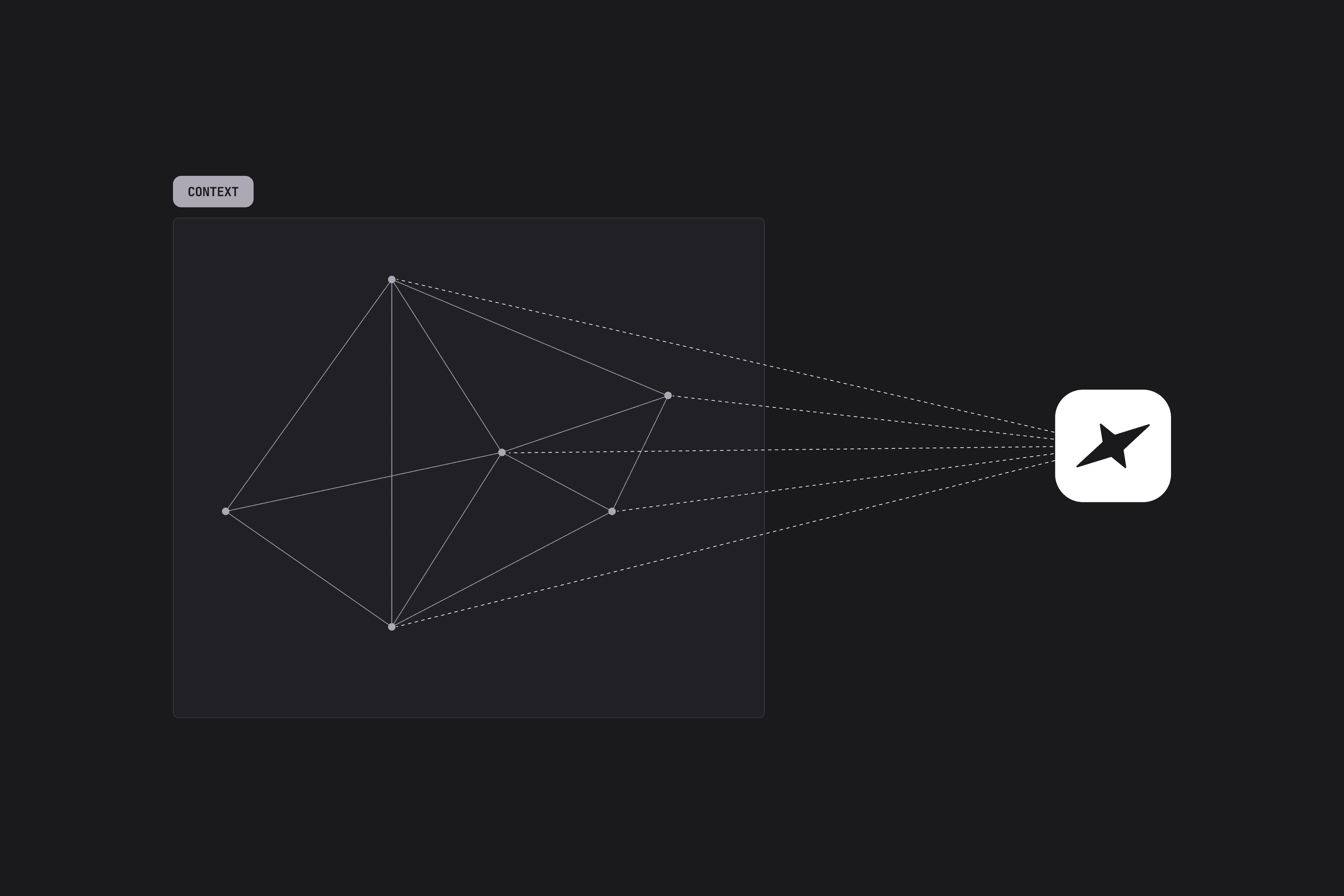
Why ChatGPT and other AI tools don't understand your strategy: the context problem of AI in strategy work
Why does AI in strategy work so often deliver generic answers? Because it lacks context. Here is what AI needs to add real value to your strategy.
Read more
What alignment really costs: the hidden costs of misalignment
Creating strategic clarity takes up a huge share of leaders' time. And because it is only a snapshot, companies end up paying for it twice.
Read more
The 400-slide strategy has had its day: why strategy work is moving back in-house
80% of marketing decision-makers want to do more in-house. Why classic strategy work is the next thing moving back into the company.
Read more